ByJohn A
Is Your Water Heater About to Leak? What to Check
Ask around, and you’ll find most people haven’t looked at their water heater in years. Why would they bother? It hums along in a basement corner, and it only really gets attention when the shower goes cold, or a sock gets wet near the utility room door. By then, the leak may have been going for a while.
A bucket only holds so much. A water heater keeps getting refilled from the cold supply line, so a cracked tank or a bad fitting just keeps leaking until somebody finally shuts the valve. That flow doesn’t stop on its own, either. That is why water damage repair after a tank failure often reaches well past the utility room, into carpet pad and the bottom of nearby drywall.
Plenty of utility rooms back right onto a finished bedroom or a family room. On jobs handled by Restoration Logistics in Centennial, that setup often means the water slides under the wall plate and appears in the neighboring room before it shows up anywhere else. The corner around the heater can look almost dry by comparison.
Why Your Tank Has a Temperature and Pressure Relief Valve
You’ll find a temperature and pressure relief valve on every tank-style water heater, normally somewhere near the top of the tank. Most people never touch it, and that’s fine. If the heat or pressure inside climbs too high, it opens and releases water. So a little water in the discharge pipe could just be the valve working as designed. A steady drip is different. Worn parts or a pressure issue might be behind it, so have a plumber check it.
The tank also has a part most people never see. A sacrificial anode, which is a metal rod usually made of magnesium or aluminum, corrodes over time so the steel tank does not. Once that rod is used up, the tank itself begins to corrode, according to a City of Scottsdale guide for homeowners. Swap the rod out in time, and the tank itself may well last longer. Few homeowners even know it exists, and who could blame them, since it’s hidden away inside the tank where nobody looks.
So, what should you watch for?
See also: Extending Equipment Lifespan with Real-Time Vibration Intelligence
Warning Signs Your Water Heater Is Leaking
A tank rarely fails without some kind of clue first. Some of these are easy to dismiss, perhaps because they seem too small to matter:
- Rust streaks or flaking near the bottom of the tank
- Wet concrete or a small puddle that keeps returning even after you dry it
- Brownish hot water coming out of your taps
- Popping or rumbling sounds while the tank heats
- Moisture around the fittings on top of the tank
The popping noise usually comes from sediment at the bottom of the tank. The Scottsdale Guide lists overheating from sediment build-up as another main cause of failure, so that sound is worth taking seriously.
Simple Water Heater Maintenance Habits
None of this takes much time. A quick look once a month catches most problems early:
- Walk past the tank and check the floor and fittings each month
- Keep boxes and stored items away from the base of the heater
- Place a drain pan under the tank if it sits near finished space
- Ask a licensed plumber to inspect the anode rod and sediment on a regular schedule
- Follow the manufacturer’s instructions for testing the relief valve
Some people prefer to flush the tank themselves. Others would rather leave it to a plumber, and that is probably the safer choice for an older unit with a stiff drain valve.
Water Damage Repair After a Water Heater Failure
If the tank starts leaking, first stop the water by closing the cold supply valve, usually on the pipe just above the tank. Next, cut the power on an electric model, or switch the gas control to off on a gas one. Take photos before you move anything.
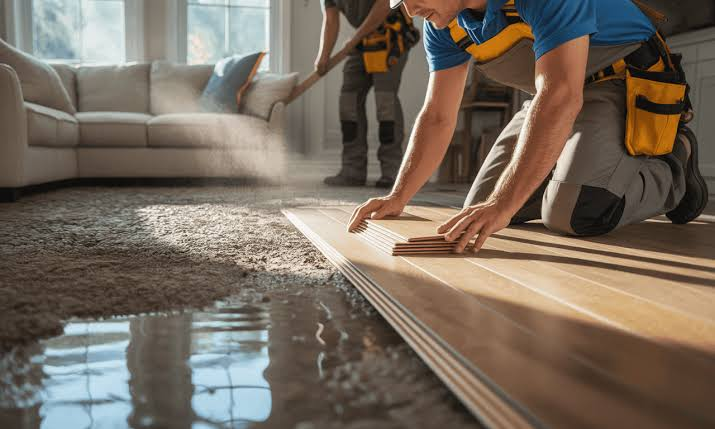
After that, the drying work begins. A restoration crew extracts the standing water and checks the nearby walls and floors with moisture meters. Wet carpet pad usually comes out, since it holds water for a long time. After that, dehumidifiers and air movers run until the readings drop back to normal. As for the new water heater, a plumber handles that, often on the same day.
Plenty of water heaters go many, many years without a single problem worth mentioning. Still, the tank is a metal container holding hot water next to finished rooms. A few minutes of attention each month costs very little compared with new flooring and drywall in the room next door.