ByJohn A
Cedar vs Heat-Treated Hemlock for a Small Sauna
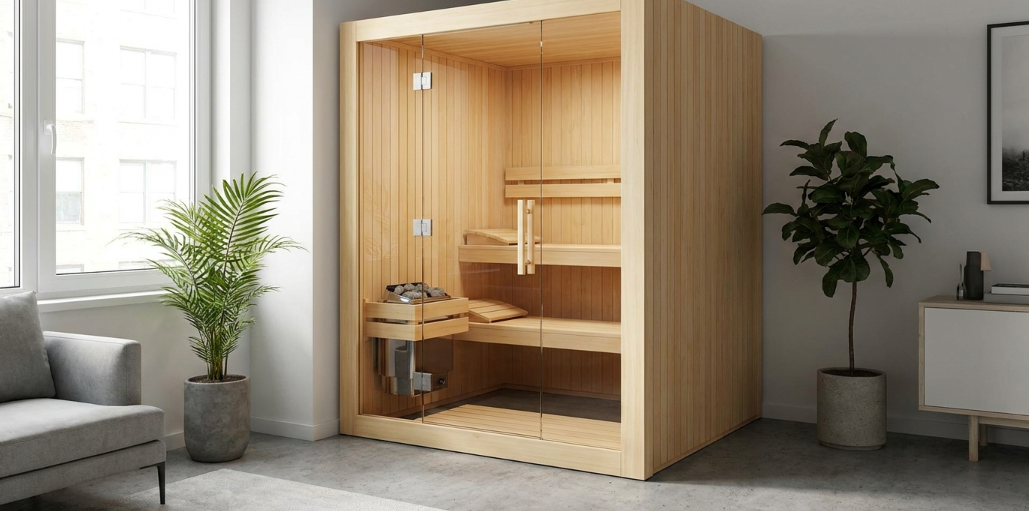
For a small two or three person sauna, cedar typically costs 20 to 35 percent more than heat-treated hemlock but brings natural decay resistance and a stronger, more recognizable scent, while hemlock is thermally modified rather than naturally oily, runs lighter in color and price, and holds up nearly as well once it has gone through the heat-treatment process. Neither is the wrong choice for a compact cabin; the decision mostly comes down to budget, scent preference, and whether the unit sits indoors or outdoors.
What Actually Separates These Two Woods?
Western red cedar is a naturally aromatic softwood with oils that resist rot, insects, and moisture without any added treatment, which is why it has been the default sauna wood for decades. Heat-treated hemlock starts as a plain, moisture-prone softwood that goes through a thermal modification process, essentially baking the wood at high heat in a low-oxygen environment, which changes its cell structure, drives out sugars that would otherwise feed decay, and leaves it more dimensionally stable and less prone to warping than untreated hemlock. The visual difference is immediate: cedar runs in warm reddish and honey tones with visible grain, while heat-treated hemlock comes out a more uniform light caramel to brown, closer to the color of coffee with cream.
How Much Does the Wood Cost for a Small Cabin?
Because a small sauna footprint, typically 4×4 to 5×6 feet, needs far less lumber than a six or eight person cabin, the dollar gap between species is smaller in absolute terms even though the percentage difference holds. Cedar paneling for a compact two or three person build commonly runs somewhere in the range of $1,200 to $2,200 depending on grade and supplier, while heat-treated hemlock for the same footprint often lands 20 to 35 percent lower. On a small build, that gap is frequently the difference between an entry-level unit and a mid-tier one with a better heater or added bench options, which is one reason hemlock has gained ground with buyers working from a tighter total budget. Shoppers comparing finished small units built from each wood species can look at current configurations through browse SweatDecks small saunas and other specialty sellers to see how the wood choice affects the final price.
Which Holds Up Better to Heat and Humidity?
Cedar’s natural oils give it a built-in resistance to moisture damage that does not depend on any factory process, which is part of why it has such a long track record in wet, high-heat environments. Heat-treated hemlock has no natural oils, but the thermal modification closes the wood’s cellular structure and reduces its capacity to absorb water to a level that, for indoor residential use, comes close to cedar’s performance. In a compact cabin where humidity from each session has less total air volume to disperse into, both woods handle the load fine as long as the door is left open to dry between uses and the unit is not exposed to standing water at the base. Outdoor exposure is where the gap widens more, since cedar’s oils continue protecting exposed exterior wood over years of rain and sun in a way that treated hemlock, while stable, tends to need a fresh sealant coat somewhat sooner to maintain the same protection.
Which Wood Smells Stronger, and Does It Matter?
Cedar has a distinct, resinous scent that many people associate with the sauna experience itself, and that scent is more concentrated in a small cabin simply because there is less air to dilute it. Heat-treated hemlock loses most of its natural wood scent during the thermal process, leaving a much milder, almost neutral smell. For a small unit shared by people sensitive to strong scents, or installed somewhere with limited ventilation, hemlock’s muted profile can be the more practical choice, especially if the sauna sits near a bedroom or living space where a lingering resin smell might carry through shared ductwork or a nearby doorway. For anyone who wants that classic, unmistakable cedar aroma the moment the door opens, that same intensity is arguably the whole point of choosing it, and it tends to fade to a background note rather than disappearing entirely as the wood ages over the first year or two of regular use.
Which Makes More Sense for an Indoor vs Outdoor Small Sauna?
For an indoor small sauna, tucked into a basement, garage corner, or spare room, heat-treated hemlock’s lower price and reduced maintenance needs make it a straightforward pick, since it will not face the sustained weather exposure that tests cedar’s natural advantages. For an outdoor small sauna exposed to rain, snow load, and direct sun, cedar’s decades-long track record and self-renewing natural oils tend to justify the higher upfront cost, particularly for owners who would rather not reapply sealant as often. Either wood, properly finished and maintained, should last well past a decade in a small residential cabin. Buyers splitting the difference sometimes choose hemlock for the frame and bench substructure, where cost savings add up over more linear feet of material, and cedar for the visible interior wall panels and benches where the scent and warmer tone are most noticeable during a session.
Do the Health Associations Around Sauna Use Depend on Wood Species?
The cardiovascular associations reported in the research are tied to the heat exposure and frequency of sauna bathing itself, not to which wood the cabin is built from. A 2018 review in Mayo Clinic Proceedings and a 2023 follow-up review in the same journal both summarized associations between regular sauna bathing and cardiovascular outcomes across long-running cohort studies, and a 2018 paper in the American Journal of Physiology – Regulatory, Integrative and Comparative Physiology reviewed the physiological effects of heat exposure more broadly. None of that research distinguishes cedar from hemlock or any other wood; the wood choice is a durability, cost, and comfort decision layered on top of a heat exposure that works the same regardless of what the walls are made from.
Frequently Asked Questions
Is cedar or heat-treated hemlock better for a small sauna? Cedar costs more and has a stronger scent, while hemlock runs 20 to 35 percent cheaper with a milder profile. Both work well in a properly ventilated compact cabin.
Does cedar or hemlock resist moisture better in a small sauna? Cedar’s natural oils give it inherent resistance. Heat-treated hemlock’s thermal modification closes its cell structure, bringing its moisture resistance close to cedar’s for indoor use.
Why does wood choice matter more in a small sauna than a large one? Less total wood surface means resin bleed, scent, and surface heat from a given species feel more concentrated than in a larger room.
Does heat-treated hemlock get as hot to the touch as cedar? The two feel similar, though hemlock’s tighter cell structure can feel marginally cooler on the bench early in a session.
References
- Cardiovascular and Other Health Benefits of Sauna Bathing: A Review of the Evidence, Mayo Clinic Proceedings, 2018
- Does the Combination of Finnish Sauna Bathing and Other Lifestyle Factors Confer Additional Health Benefits? A Review of the Evidence, Mayo Clinic Proceedings, 2023
- Effects of heat and cold on health, with special reference to Finnish sauna bathing, American Journal of Physiology – Regulatory, Integrative and Comparative Physiology, 2018
By Thomas Baransky